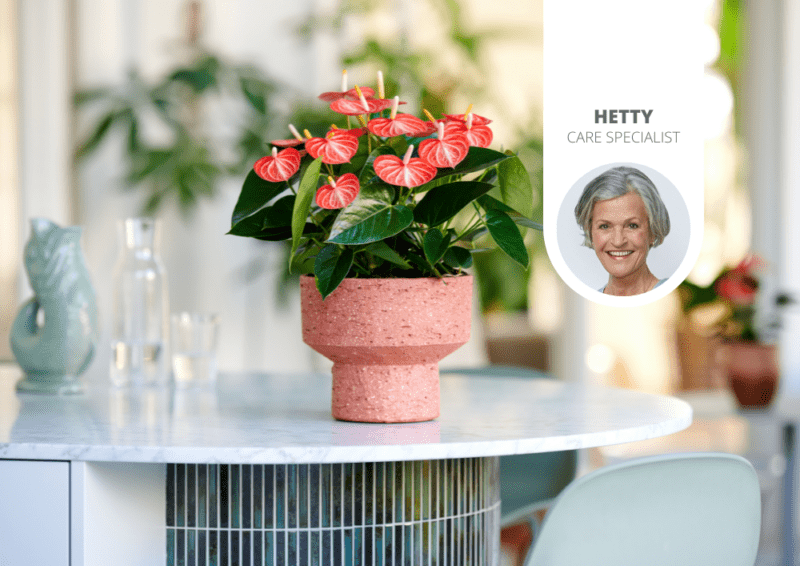
Can I ditch the plastic nursery pot for my Anthurium plant?
When you buy a new Anthurium plant, it always comes in a plastic nursery pot. Many people see this pot as something temporary. As soon as they find a decorative outer pot they like, the plastic one goes straight in the bin. That’s understandable, as a nursery pot isn’t exactly decorative. However, with an Anthurium – and most other houseplants – it’s actually better to keep it.
The importance of a plastic nursery pot
The Anthurium is a fairly hardy plant, but it does have specific needs when it comes to watering. Its roots like lightly moist compost, but they absolutely do not tolerate sitting in water. This is where the inner pot plays a crucial role. A plastic nursery pot has drainage holes at the bottom, allowing excess water to drain away easily. If you place the Anthurium (still in its inner pot) inside a decorative outer pot, you can simply check after watering whether any water has collected at the bottom. If you see water in the outer pot, you can pour it away. This prevents the roots from sitting in a layer of water for too long.
If you don’t use a nursery pot and plant the Anthurium directly into a decorative pot without drainage holes, you run a risk. Water can accumulate at the bottom without you noticing, leaving the roots constantly wet. Over time, this can lead to root rot – a process in which the roots begin to decay due to a lack of oxygen. The plant can no longer absorb water and nutrients properly. Leaves may become limp or turn yellow, and eventually the plant may die. By the time you notice the symptoms, the damage is often already advanced.
An alternative to the nusery pot
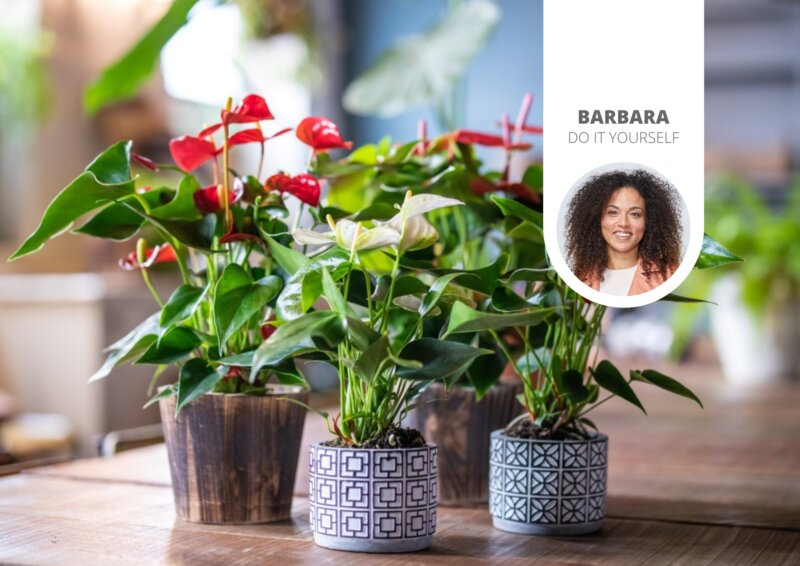
If you prefer not to use a plastic nursery pot, or if it’s time to repot your houseplant, choose a decorative pot with a saucer, such as a terracotta pot. These pots have a drainage hole at the base, allowing excess water to escape and helping you prevent root rot.
Also read: Repotting an Anthurium pot plant: a few tips